Lebanese hair damage does not happen overnight — and it does not recover overnight either. The chronic dryness, persistent frizz, and progressive breakage that Lebanese women describe as their hair "going bad" is the result of months or years of cumulative stress from heat tools, hard tap water, Beirut's humidity cycles, and insufficient restoration. The good news: almost all of it is reversible — not instantly, but predictably, with the right sequence of steps applied consistently. This guide gives you the complete repair protocol — from damage assessment to full recovery — specific to Lebanese hair and Lebanese conditions.
Damage Assessment · Lebanese Hair · 2026
First — identify your damage level. The recovery protocol is different for each.
Mild Damage
Some frizz in Beirut humidity · slightly dry ends · minor breakage · styles hold 4–6 hours · hair still has shine
Recovery: 4–6 weeks
Moderate Damage
Consistent frizz · dry throughout · noticeable breakage · styles fall within 2 hours · dull appearance · rough texture
Recovery: 6–12 weeks
Severe Damage
Extreme frizz always · very brittle · significant breakage daily · cannot hold any style · gummy when wet · visible thinning at ends
Recovery: 3–6 months
The 5-Phase Lebanese Hair Recovery Protocol
Each phase builds on the previous one. Do not skip ahead — the sequence matters. Lebanese hair that has been damaged over months requires a structured, progressive approach to repair effectively.
Every repair effort is undermined if new damage is being added simultaneously. Phase 1 is about creating the conditions for recovery — not yet about actively repairing. Nothing done in Phase 2 onward will work while the damage sources are still active at full intensity.
Why stopping damage comes before repair
Hair repair treatments work by supplementing the cortex's moisture content and coating the damaged cuticle. If heat damage is applied to the same strand that received an Argan Oil treatment 24 hours earlier, the thermal exposure removes the restored moisture before it has time to integrate into the cortex structure. The repair cycle requires a baseline reduction in damage input before restoration can produce cumulative gains.
A
Apply heat protectant before every single heat tool use from today. No exceptions — not for touch-ups, not for "just a quick pass." 3–4 sprays of Argan Oil on every section, root to tip, every time.
B
Replace all elastic hair ties with Satin Scrunchies. Remove elastics from your bathroom, bag, and house entirely. The concentrated tension point of an elastic on damaged Lebanese hair causes disproportionate breakage.
C
Start sleeping with a Satin Scrunchie every night. 8 hours of cotton friction on damaged hair accelerates the damage faster than almost any daytime factor. This change costs 30 seconds and produces visible results within 3–4 nights.
D
Reduce heat styling to 3 days per week maximum for the first 4 weeks of recovery. The 2–3 heat-free days per week give restoration treatments time to integrate before the next heat session removes them.
E
Drop your heat setting by 15°C. Damaged Lebanese hair is more porous than healthy hair — it absorbs heat faster and requires less temperature to style. Your current setting is likely 20–30°C higher than damaged hair actually needs.
Phase 1 Essential
Satin Crystal Scrunchies
The fastest-acting Phase 1 change — eliminates overnight friction damage and elastic tie breakage simultaneously. Two of the most active damage sources for Lebanese hair, removed tonight.
Shop Now →
With new damage reduced, the restoration phase begins. The goal is to rebuild the cortex moisture that months or years of heat styling and Lebanese environmental stress have depleted — the internal structural hydration that conditioner alone cannot restore.
Why Argan Oil reaches where conditioner cannot
Standard conditioner molecules are too large to penetrate the hair cuticle — they coat the surface and create the appearance of moisture without addressing the cortex deficit. Argan oil's fatty acids — primarily oleic acid (73%) and linoleic acid (13%) — have a molecular size small enough to penetrate the cuticle and reach the cortex. This cortex penetration is the only way to restore the structural moisture that determines whether Lebanese hair feels healthy or brittle from the inside out. Weekly overnight applications give maximum penetration time — significantly more effective than in-shower treatments with 3-minute contact time.
1
Night before wash day — apply Argan Oil generously to completely dry hair, not damp. Dry hair allows faster, deeper penetration than damp hair where water occupies the cuticle channels.
2
Apply root to tip — focus especially on mid-lengths and ends which are the oldest and most damaged sections of Lebanese hair. Do not avoid the ends out of fear of heaviness — they need it most.
3
Leave overnight with hair secured in a loose Satin Scrunchie bun. Minimum 6 hours of penetration time — the longer the better for severely damaged Lebanese hair.
4
Wash out thoroughly the next morning. Follow with your regular conditioner. The Argan Oil treatment does not replace washing — it supplements the conditioner's surface coating with deep cortex restoration.
5
For severely damaged Lebanese hair: do this twice per week for the first 4 weeks, then reduce to once per week as condition improves.
Phase 2 Core Product
Moroccan Argan Oil Spray — Overnight Treatment
Penetrates the cortex of damaged Lebanese hair to restore structural moisture from the inside out — the only approach that addresses the root cause of damage rather than masking it at the surface. Apply generously before sleep, every week without fail.
Shop Now →
Damaged Lebanese hair is significantly more vulnerable to mechanical breakage than healthy hair — its compromised cuticle and reduced moisture content mean it snaps at lower stress levels. If the detangling technique is not corrected during repair, brushing sessions remove the length that treatments are working to preserve.
The mechanics of damaged hair breakage
Healthy Lebanese hair can stretch 20–30% before breaking. Damaged hair with under 6% moisture content may break at only 5–8% stretch. The same brushing force that produces minimal breakage on healthy hair causes severe breakage on damaged Lebanese hair. Root-to-tip brushing concentrates tension at knot points — which damaged hair cannot withstand. Ends-first detangling with proper slip distributes this tension across the full section, keeping it below the breakage threshold even on severely damaged strands.
1
Always apply 1–2 sprays of Argan Oil before detangling damaged Lebanese hair — even when not styling. The oil creates slip that reduces the force needed to release each knot, keeping stress below the breakage threshold.
2
Start at the bottom 3–4cm. Work through all knots in that section gently. Move up 3–4cm. Repeat. Never advance to a higher section until the section below is fully clear.
3
If the brush meets resistance — stop and use fingers to release the knot first. Forcing a brush through a knot on damaged Lebanese hair causes exactly the type of breakage that extends the recovery timeline.
4
Clean the brush after every single session. Accumulated hair in bristles creates resistance that multiplies friction on damaged hair with every stroke. Self-cleaning brushes that clear instantly eliminate this variable entirely.
Phase 3 Tool
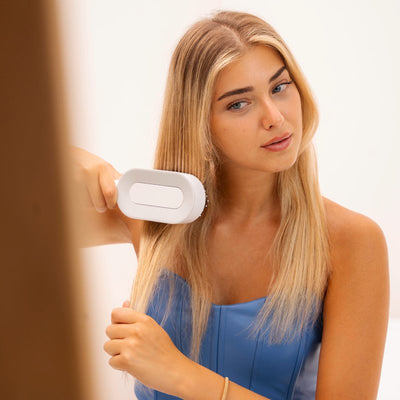
Self-Cleaning Hair Brush
Flexible bristles distribute detangling tension across damaged Lebanese hair rather than concentrating it at vulnerable snap points. One-press self-cleaning keeps friction consistently low on every stroke — critical during recovery when damaged hair is at its most breakage-vulnerable.
Shop Now →
Damaged Lebanese hair does not mean no styling — it means styling correctly. Once the weekly restoration is established and damage sources are reduced, styling can resume with the right tools and technique that prevents re-damage while achieving the results you want.
Why ceramic tools are essential during recovery
Damaged Lebanese hair has a more porous, open cuticle than healthy hair — which means it absorbs heat faster and more unevenly. Metal tools with hot spots cause significantly more damage on already-damaged, porous hair than on intact hair because the open cuticle channels allow heat to reach the cortex faster and at higher effective temperatures. Full ceramic tools distribute heat uniformly — the only heat tool safe for use on damaged Lebanese hair during active recovery.
1
Use only full ceramic tools during recovery. Any metal or worn tourmaline tool should be retired — not reduced in frequency, retired. The hot-spot damage it causes on already-damaged Lebanese hair extends recovery by months.
2
Apply Argan Oil before every heat session — this is now both a repair step and a styling step. The protectant barrier is even more critical on damaged, porous Lebanese hair than on healthy hair.
3
Use the lowest effective temperature for your style. Damaged Lebanese hair sets curls and straightens at lower temperatures than healthy hair because its porous cuticle allows heat to reach the cortex faster. Drop 20°C from what you used before damage.
4
Seal with Supercoat immediately after every session. Damaged Lebanese hair's open cuticle absorbs Beirut's humidity 3–4× faster than intact hair — sealing is not optional during recovery, it is the step that protects the week's restoration work from being undone by one outdoor exposure.
Phase 4 Styling Tool
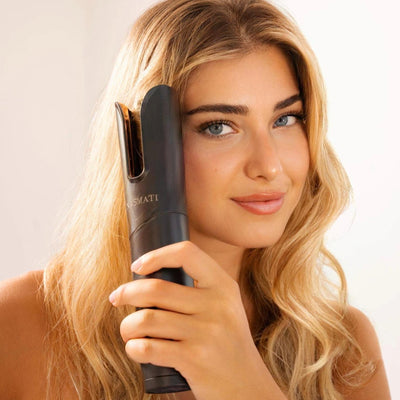
Cordless Hair Curler Pro — Full Ceramic
Full ceramic barrel with no hot spots — the only safe heat tool on damaged Lebanese hair during recovery. Adjustable temperature allows the lower settings that damaged, porous hair requires to style without causing additional protein denaturation.
Shop Now →
Phase 5 is not an active repair phase — it is the transition from recovery to maintenance. The habits built in Phases 1–4 become permanent routine. The goal now is preventing the re-accumulation of damage that led to the recovery protocol being needed in the first place.
Why maintenance is different from repair
Once Lebanese hair is restored to a healthy moisture level and damage accumulation is reduced, the weekly Argan Oil treatment shifts from a repair tool to a maintenance tool. The cortex no longer needs to recover from a deficit — it needs to stay above the brittleness threshold through ongoing protection and restoration. Lebanese women who maintain the Phase 5 habits indefinitely essentially eliminate the "my hair suddenly went bad" experience entirely — because the cumulative damage that produces that experience never accumulates to the threshold level.
1
Seal every single styled session with Supercoat before outdoor exposure in Beirut. This is the habit that most Lebanese women skip and re-accumulate humidity damage from. It takes 30 seconds and protects hours of styling work.
2
Continue weekly overnight Argan Oil treatment. During recovery this was repairing a deficit — in maintenance it prevents a new one from forming. The cumulative benefit of 52 overnight treatments per year keeps Lebanese hair consistently above the brittleness threshold.
3
Sleep with Satin Scrunchie every night without exception. This habit has zero effort cost and prevents 8 hours of nightly friction damage that would otherwise require active repair to offset.
4
Keep ceramic tools and retire any metal alternatives. The prevention of hot-spot damage requires ceramic as a permanent choice — not a temporary recovery measure.
Phase 5 Daily Essential
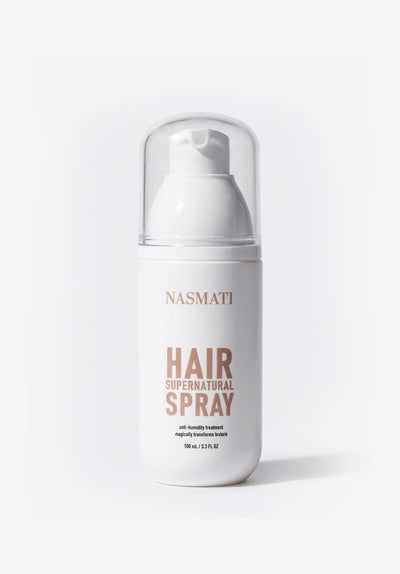
Supernatural Anti-Frizz Humidity-Proof Supercoat
The maintenance step that prevents recovered Lebanese hair from re-accumulating humidity damage. Apply after every styling session, before every Beirut outdoor exposure. The 30-second habit that makes recovery permanent.
Shop Now →
3 Things Lebanese Women Do During Recovery That Make It Worse
Common recovery mistakes that extend the timeline significantly or undo the progress made in earlier phases.
⚠ Mistake 01
Applying protein treatments aggressively during active recovery. Protein overload — from excessive keratin or protein treatments — makes damaged Lebanese hair feel harder and more brittle, not softer and stronger. During the recovery phases outlined above, Argan Oil moisture restoration is what damaged Lebanese hair needs — not more protein layering on top of already protein-disrupted strands. If you use a salon keratin treatment, wait until recovery is complete first.
⚠ Mistake 02
Cutting all the damaged ends off immediately. Many Lebanese women cut severely damaged ends as a first response — which removes the damaged hair but also removes the length and does nothing to address the habits that caused the damage. The damage will return to the new ends within months if the routine is not changed. Follow Phases 1–3 first. Let the habits change. Then trim — the result is shorter but genuinely healthy hair rather than another cycle of damage at a shorter length.
⚠ Mistake 03
Expecting recovery in 1–2 weeks. Lebanese hair that has been accumulating damage for 12–24 months does not recover in 2 weeks. The recovery timelines in this guide — 4–12 weeks for mild to moderate damage — require consistent application of the protocol for the full duration. Stopping after 2 weeks because "it's not working yet" is the single most common reason Lebanese women repeat the damage cycle indefinitely.
Your Lebanese Hair Recovery Checklist — Week by Week
1
Today: Switch to Satin Scrunchies for sleep and all ponytails. Apply Argan Oil before heat tools from this moment forward.
2
This week: First overnight Argan Oil treatment — apply before sleep tonight. Reduce heat styling to 3 days maximum this week.
3
Week 2: Establish ends-first detangling technique. Every brush session. Replace any metal tools with ceramic alternatives.
4
Week 3–4: Second and third weekly overnight Argan Oil treatments complete. Lower heat setting by 15°C. Seal every style with Supercoat before outdoor exposure.
5
Week 6: First visible improvement milestone — texture noticeably softer, breakage in brush significantly reduced, morning frizz improved. Mild damage fully recovered. Moderate damage at halfway point.
6
Week 8–12: Moderate damage fully recovered. Severe damage significantly improved. Transition to maintenance phase — same habits, sustained indefinitely.
Lebanese Women on Their Recovery
★★★★★
"My hair was in terrible condition — breaking constantly, looked dull, would not hold any style. Eight weeks of the weekly Argan Oil treatment and the satin scrunchie at night and I genuinely have different hair. Not slightly better — completely transformed."
— Carla, Beirut
★★★★★
"The sequencing in this guide was what I had been missing. I tried treating my hair for months but kept using the metal curler at the same time. Switching to the ceramic Nasmati curler while doing the treatments — that is when things actually changed."
— Rima, Jounieh
★★★★★
"Week 6 is real. I almost gave up at week 4 thinking nothing was happening. Week 6 I looked in the mirror and my hair looked completely different. You have to trust the timeline."
— Tala, Batroun
Your hair has been damaged over months — recovery takes weeks, not days. Trust the protocol and apply it consistently. The complete Nasmati hair repair system — Argan Oil, Satin Scrunchies, Supercoat, ceramic tools, Self-Cleaning Brush — free express shipping across Lebanon. 12-month warranty on every tool.
Shop the Full Nasmati Collection →
Find out your damage level and the right tools — try the free AI Hair Analyzer →