"How often should I wash my hair?" is one of the most searched hair questions in Lebanon — and also one of the most incorrectly answered. Most Lebanese women are washing their hair either too frequently or not frequently enough based on a generic rule that was never designed for thick Arab hair, Lebanon's hard tap water, or the specific way sebum production works on Lebanese scalp types. The correct answer depends on your specific scalp type, hair thickness, and Lebanese lifestyle factors — and getting it right makes a measurable difference in hair health, volume, and styling results.
The Short Answer · Lebanese Hair Types
There is no universal "right" answer — but there is a right answer for your specific hair type
Oily Scalp
Every 2–3 days
Fine to medium Lebanese hair that becomes greasy quickly at roots
Normal / Balanced Scalp
Every 3–4 days
Most thick Lebanese hair — the optimal frequency for sebum balance and scalp health
Dry Scalp / Colored
Every 5–7 days
Dry or chemically treated Lebanese hair that loses moisture faster than sebum can replenish it
The 6 Factors That Determine the Right Wash Frequency for Lebanese Hair
Every Lebanese woman's correct wash frequency is determined by these six factors in combination — not by a single rule applied to everyone.
Scalp type — specifically how quickly your scalp produces sebum — is the single most important factor in determining how often Lebanese hair should be washed. It overrides hair thickness, length, and almost every other consideration.
The science
Sebum is the scalp's natural oil — it travels down each hair shaft providing natural moisture, shine, and protection. Sebum production rate varies significantly between Lebanese women based on genetics, hormones, and scalp health. Washing hair before sebum has had time to travel down the shaft strips the scalp of oil it just produced — triggering compensatory overproduction that makes hair greasier faster after each wash. Washing after the optimal sebum accumulation window allows the oil to perform its full protective function before removal. Over-washing actually creates the oily scalp problem it attempts to solve.
Thick Lebanese hair with high strand density requires less frequent washing than fine Lebanese hair — for a specific reason that most Lebanese women are not aware of.
The science
Sebum production is per follicle — not per strand. Thick Lebanese hair has many more strands than fine hair, meaning the sebum from each follicle must coat a larger total surface area before the hair appears oily. The same amount of sebum that makes fine Lebanese hair look greasy after one day leaves thick Lebanese hair looking healthy and hydrated after two days — because it has far more surface area to distribute across. This is why the advice Lebanese women with fine hair give about wash frequency is almost always wrong for their thick-haired peers.
Lebanon's tap water mineral content is one of the strongest arguments for washing Lebanese hair less frequently. Each wash is not a neutral event — it deposits minerals, strips sebum, and temporarily weakens the cuticle. Understanding this changes how Lebanese women should think about their wash frequency.
The science
Lebanon's tap water contains elevated levels of calcium and magnesium — minerals that deposit on the hair shaft with every wash and do not fully rinse out. Each deposit layer: (1) makes hair feel coarser, (2) blocks moisture from entering the cortex, and (3) reduces the effectiveness of subsequent conditioning treatments. Lebanese women who wash daily are depositing mineral buildup 7 times per week versus 2–3 times for less frequent washers — accumulating the hard water damage that contributes significantly to the chronic roughness and dullness many describe as "just how Lebanese hair is."
Lebanese women who style their hair with heat tools frequently should wash less often than those who do not — because each wash resets the hair's moisture state, and each heat styling session costs moisture that takes time to restore. The wash-style-wash cycle when done too frequently creates a chronic moisture deficit.
The science
Every wash slightly swells and then closes the hair cuticle — a mechanical stress event that is minor individually but cumulative over many washes. Every heat styling session removes 6–22% of hair moisture depending on tool and protection used. A Lebanese woman who washes daily and styles daily is applying both stressors every 24 hours with no recovery window. Spacing washes to every 3–4 days means the hair has 2–3 days of sebum restoration and minimal mechanical stress between the wash-and-style events that are unavoidable.
The correct wash frequency for Lebanese hair in January is different from July — and adjusting for seasonality is one of the most overlooked elements of Lebanese hair care routines.
The science
Lebanon's summer heat increases sebum production (heat stimulates sebaceous glands), adds sweat and environmental pollution to scalp buildup, and increases the urgency of washing from a scalp health perspective. Lebanon's winter AC exposure reduces scalp oil production and increases scalp dryness. Most Lebanese women need to wash 1 day more frequently in summer than winter — adjusting from their base frequency upward June through September to manage the combination of increased sebum, sweat, and environmental particulates that Lebanese summer conditions create on the scalp.
Lebanese women with colored, highlighted, or chemically treated hair have a specific and important reason to wash less frequently — each wash accelerates color fade and removes the treatment benefits that are expensive to maintain.
The science
Chemical coloring opens the cuticle permanently, creating a pathway for water to cycle in and out of the cortex. Each wash creates this cycling — carrying color molecules out with it. Colored Lebanese hair washed daily fades measurably faster than the same hair washed every 4–5 days — the color investment from a Lebanese salon visit lasting weeks less than it could with a simple frequency adjustment. The same applies to keratin treatments, which water progressively dissolves with each wash.
Between-Wash Maintenance
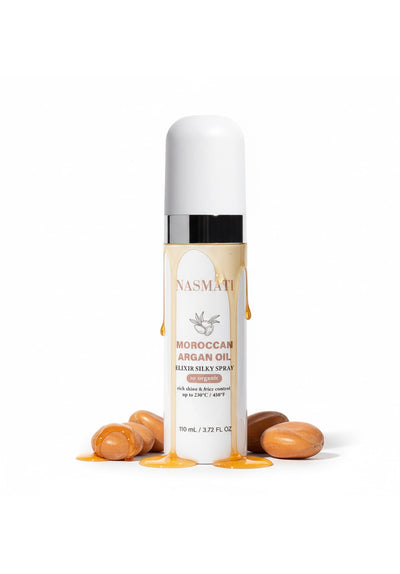
Moroccan Argan Oil Spray
Applied to dry Lebanese hair between washes, Argan Oil restores the scalp sebum's nourishing function for sections the natural oil hasn't reached yet — keeping mid-lengths and ends hydrated and healthy through longer intervals between washes.
Shop Now →
The Complete Wash Frequency Guide for Lebanese Hair
| Hair + Scalp Type |
Recommended Frequency ✓ |
Summer Adjustment |
Key Reason |
| Fine hair, oily scalp |
Every 2 days |
Daily in peak summer |
Low surface area = sebum shows faster |
| Medium hair, normal scalp |
Every 3 days |
Every 2 days summer |
Balanced sebum distribution |
| Thick hair, normal scalp |
Every 3–4 days |
Every 3 days summer |
High surface area — sebum distributes further |
| Thick hair, dry scalp |
Every 4–5 days |
Every 3–4 days summer |
Preserve natural oils — prevent dryness |
| Colored / highlighted hair |
Every 4–5 days |
Every 3–4 days summer |
Reduce color-fading water cycling |
| Thick + colored + dry scalp |
Every 5–6 days |
Every 4 days summer |
Maximum protection for most vulnerable hair |
| Post-gym / active lifestyle |
Rinse without shampoo |
Rinse + dry shampoo roots |
Water rinse removes sweat without stripping sebum |
What Lebanese Women Should and Should Not Do on Wash Days
✓ Do — On Wash Days
Apply Argan Oil to damp hair immediately after washing — before drying. This compensates for the moisture washing removes.
Press — do not rub — with a towel after washing. Rubbing wet Lebanese hair causes significant cuticle abrasion.
Use lukewarm — not hot — water. Hot water strips more sebum and opens the cuticle more aggressively than necessary.
Wait until hair is 85% dry before any heat tool. Wet Lebanese hair is 40% weaker than dry hair.
Do your weekly Argan Oil overnight treatment the night before wash day — so it washes out cleanly while maximizing cortex penetration time.
✗ Don't — On Wash Days
Brush Lebanese hair while wet. Wet hair is at maximum vulnerability — use fingers or wide-tooth comb only until 80% dry.
Wash and immediately style with full heat. The wash-to-heat window should be at least 20–30 minutes of air-drying first.
Use maximum heat on freshly washed Lebanese hair. The cuticle is temporarily more open after washing and more susceptible to heat penetration.
Skip conditioner because hair "already feels clean." Shampoo strips protective oils — conditioner restores the surface coating that protects the cuticle until the next wash.
Wash hair at the same frequency year-round regardless of Lebanese seasonal conditions. Adjust by 1 day in summer.
How to Keep Lebanese Hair Fresh Between Washes
Day 2
Roots looking fresh, ends may need moisture. Apply 1–2 sprays Argan Oil to mid-lengths and ends only. Do not apply to roots — this adds unnecessary oil to a scalp not yet ready for washing.
Day 3
Roots may show some oil, style holds well. This is the sweet spot for thick Lebanese hair — natural sebum has traveled to mid-lengths, providing natural shine and protection. A quick pass with the Comb Straightener at low heat refreshes the surface without requiring a full wash.
Day 4
For women extending to 4-day cycles. Apply Supercoat to control any humidity-related frizz from Beirut's air. Style the top visible layer only with the Comb Straightener if needed. Secure with Satin Scrunchie overnight to preserve the day-4 freshness as long as possible.
Post-gym
Never shampoo after every workout. Rinse with water only to remove sweat — this refreshes without stripping the sebum protection. Apply Argan Oil to damp hair after rinsing to restore moisture. A full shampoo wash after every gym session is one of the most common causes of over-washing among Lebanese women.
Overnight
Satin Scrunchie every night — particularly important between washes when Lebanese hair's natural oils are at their peak distribution. Cotton pillowcase friction removes these natural oils from the hair shaft overnight, requiring an earlier wash than would otherwise be necessary.
What Lebanese Women Are Saying
★★★★★
"I used to wash every day because my scalp felt oily. Someone told me to try every 3 days and the oiliness actually reduced — my scalp stopped overproducing. I had been making the problem worse my whole life."
— Rana, Beirut
★★★★★
"The hard water point was new to me. I have been washing my colored hair every 2 days and my color was fading within 2 weeks of the salon. Switched to every 4 days and my last color lasted nearly 6 weeks before needing a refresh."
— Carla, Jounieh
★★★★★
"The Argan Oil between washes changed day 3 completely for me. My hair actually looks better on day 3 now than it used to on day 1 because the natural oils plus the Argan Oil give it a shine that freshly washed hair does not have."
— Zeina, Batroun
Washing less but washing right is the single most underrated Lebanese hair care upgrade. The complete between-wash Nasmati system — Argan Oil, Supercoat, Satin Scrunchies — keeps Lebanese hair fresh longer between washes. Free express shipping across Lebanon. 12-month warranty on every tool.
Shop the Full Nasmati Collection →
Find your complete Lebanese hair routine — try the free AI Hair Analyzer →