Lebanese women color their hair more than almost any other population in the Arab world — from subtle highlights to full balayage to vivid color transformations. What most do not realize is that the moment hair is chemically colored, its entire physical structure changes permanently — it becomes more porous, more fragile, more reactive to Lebanon's humidity, and significantly more vulnerable to heat tool damage. The tools, techniques, and products that worked on natural Lebanese hair before coloring are no longer sufficient after it. This guide covers exactly what colored Lebanese hair needs — and why — in 2026.
Colored Hair Science · Lebanon · 2026
What coloring does to Lebanese hair — the structural changes that change everything
3–4×
More porous after coloring than natural hair
40%
Reduction in tensile strength after bleaching
20°C
Lower safe heat limit vs natural Lebanese hair
2×
Faster humidity absorption in Beirut conditions
Your Color Type Determines Your Care Protocol
Not all colored Lebanese hair has the same needs. The specific chemical process used determines the damage level and the care intensity required.
Lowest Damage
Semi-Permanent / Toning
No lifting involved. Cuticle slightly opened but not permanently altered. Needs: basic moisture maintenance + weekly Argan Oil. Heat limit: 165°C.
Moderate Damage
Permanent Color / Full Coverage
Cuticle opened and color deposited permanently. Porosity increased. Needs: weekly deep treatment + heat protectant always. Heat limit: 150°C.
High Damage
Highlights / Balayage
Partial bleaching of selected strands. Those strands are significantly weaker and more porous. Needs: intensive weekly treatment + very low heat. Heat limit: 140°C on highlighted strands.
Highest Damage
Full Bleach / Platinum / Vivid
Maximum cuticle disruption. Up to 40% reduction in tensile strength. Needs: twice-weekly deep treatment + ceramic tools only + maximum caution with heat. Heat limit: 130°C.
8 Rules for Colored Lebanese Hair That Every Woman Needs to Know
The rules that natural hair can bend, colored Lebanese hair cannot. Each one addresses a specific vulnerability created by the coloring process.
This is the single most important rule for colored Lebanese hair and the one most Lebanese women are not following. The temperature that was safe on natural Lebanese hair is too high for colored Lebanese hair — not by preference, by physics.
The science
Chemical coloring opens and permanently alters the hair cuticle, creating a more porous structure that absorbs heat faster than intact natural hair. Colored Lebanese hair reaches damaging internal temperatures at 20–30°C lower than natural hair would under the same tool setting. The 185°C that was appropriate on your natural hair effectively applies 205–215°C of thermal impact to your colored hair's cortex — far into the protein denaturation range where permanent structural damage occurs.
Safe Heat Limits for Colored Lebanese Hair
Semi-permanent / toningMax 165°C
Permanent colorMax 150°C
Highlights / balayageMax 140°C on colored strands
Full bleach / platinumMax 130°C — handle with maximum care
Essential for Colored Hair
5-in-1 Magic Hair Curler
Precise adjustable temperature down to 150°C with full ceramic distribution — achieves the same styling result on colored Lebanese hair at the lower, safe temperature that metal tools cannot consistently maintain.
Shop Now →
Colored Lebanese hair requires heat protectant more urgently than natural hair — and requires more of it per application. The porosity created by chemical coloring means the protectant needs to fill more cuticle gaps to create an effective thermal barrier.
The science
The thermal barrier a heat protectant creates depends on coating the cuticle surface uniformly. Colored hair's raised, porous cuticle has more surface area and more gaps than intact natural hair — requiring approximately 30–40% more protectant product to achieve the same barrier coverage on colored Lebanese hair as on natural hair. Argan oil's fatty acid composition also specifically replenishes the lipid layer that chemical coloring strips from the cuticle — making it uniquely suited as both a protectant and a color-care product.
The application for colored hair
4–5 sprays per section on colored Lebanese hair — more than the 3 recommended for natural hair. Focus especially on the colored sections (mid-lengths to ends on balayage, all sections on full-color). Let it absorb for 60 seconds before applying the heat tool — colored hair's porous cuticle absorbs the protectant faster than natural hair and is ready for heat sooner.
Most Critical Product for Colored Hair
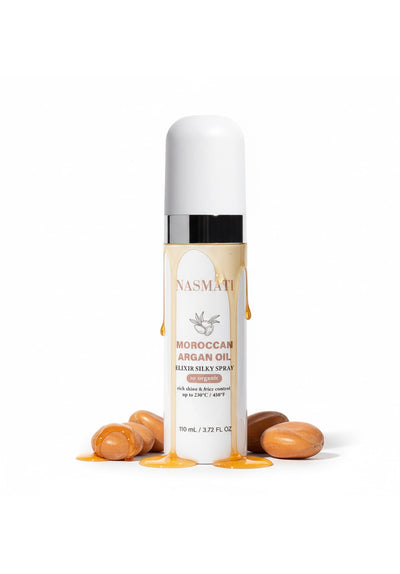
Moroccan Argan Oil Heat Protectant Spray
Argan oil's fatty acids replenish the lipid layer that chemical coloring strips from Lebanese hair — simultaneously protecting against heat damage and actively nourishing the colored cuticle with every styling session.
Shop Now →
For colored Lebanese hair, the Supercoat serves a second function beyond style preservation — it seals the porous colored cuticle against the humidity that accelerates color fading. Beirut's coastal humidity is one of the most aggressive color-fading environments Lebanese women can live in.
The science
Color molecules are deposited inside the cortex during the coloring process. The porous, open cuticle of colored hair provides a pathway for water molecules to enter and exit the cortex continuously — and as water cycles in and out, it carries color molecules with it. This is why colored Lebanese hair fades fastest in humid conditions — Beirut's coastal humidity causes continuous water cycling through the open cuticle, leaching color with every exchange. The Supercoat's humidity barrier slows this cycling dramatically, extending color vibrancy between salon visits.
The colored hair sealing routine
Apply Supercoat after every styling session AND before outdoor exposure in Beirut. For colored Lebanese hair specifically — also apply a light pass of Supercoat on non-styling days before going outdoors. Humidity fades color even on days you do not use heat tools. The barrier on non-styling days is as important as on styling days for color longevity.
Color Protection + Frizz Control
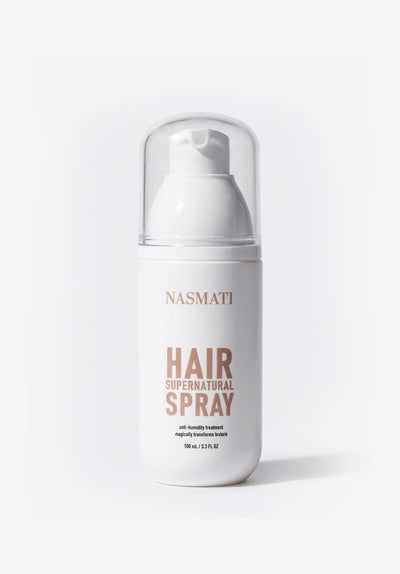
Supernatural Anti-Frizz Humidity-Proof Supercoat
Seals the porous colored cuticle against Beirut's humidity — simultaneously preventing style collapse and slowing the color-fading water cycling that Lebanese conditions accelerate. Apply daily for colored Lebanese hair, not just on styling days.
Shop Now →
Natural Lebanese hair can maintain acceptable condition with one weekly deep treatment. Colored Lebanese hair — particularly highlighted or bleached hair — loses moisture 2–3× faster and requires twice-weekly restoration to stay above the brittleness threshold.
The science
Chemical coloring strips the hair's natural lipid layer — the fatty acids that seal the cuticle and retain internal moisture. Without this layer, colored Lebanese hair loses moisture through three simultaneous channels: heat styling evaporation, humidity cycling, and passive atmospheric loss through the open cuticle. Twice-weekly Argan Oil treatments for colored Lebanese hair are not excessive — they are the minimum restoration rate needed to offset the accelerated moisture loss that colored hair's compromised cuticle creates in Lebanese conditions.
The twice-weekly colored hair treatment
Night before each wash day — apply Argan Oil generously to dry hair. For highlighted or bleached hair: focus saturating the colored strands specifically, as these are the most moisture-depleted sections. Leave overnight minimum. For full-color or permanent color: 30 minutes minimum is sufficient — overnight is better. This schedule maintains the moisture level that keeps colored Lebanese hair feeling healthy and looking vibrant rather than dry and dull between salon visits.
Colored Lebanese hair breaks at a fraction of the mechanical stress that natural hair can withstand. Detangling without adequate slip on colored hair — particularly highlighted or bleached sections — causes significantly more breakage per brushing session than on natural hair, removing the color-treated length that took the most investment to create.
The science
Bleaching reduces the tensile strength of Lebanese hair by up to 40%. A bleached strand that once required 60g of force to break now breaks at 36g. The same brushing force that produced minimal breakage on natural Lebanese hair now snaps colored and bleached strands with ease. Adding Argan Oil before detangling reduces the friction coefficient between bristles and hair strands — lowering the effective force required to release each knot below the breaking threshold of even heavily processed colored hair.
Detangling colored Lebanese hair correctly
Always apply 2–3 sprays of Argan Oil before touching a brush to colored Lebanese hair — dry or damp. Start at ends, work upward in very small sections. If any resistance is felt, release with fingers first. Never force through a knot on bleached or highlighted sections — the strand will snap before the knot releases. Use a brush with flexible bristles that distribute tension rather than concentrate it.
Gentle Detangling for Colored Hair
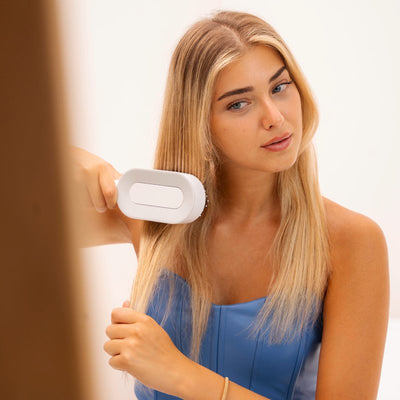
Self-Cleaning Hair Brush
Flexible bristles distribute detangling stress across colored Lebanese hair rather than concentrating it at the snap points of weakened, bleached strands. Self-cleaning keeps bristle friction consistently low — critical for hair that breaks at significantly lower stress levels than natural hair.
Shop Now →
Overnight cotton friction damages colored Lebanese hair through two mechanisms simultaneously — the physical breakage that removes colored length, and the moisture cycling that fades color. Both accelerate significantly compared to natural hair. Eight hours of nightly protection costs 30 seconds and addresses both problems.
The science
Cotton pillowcase friction against colored hair causes cuticle abrasion that creates pathways for color molecules to exit the cortex during sleep — in addition to the mechanical breakage that removes length. Lebanese women with colored hair sleeping on cotton pillowcases without securing their hair are simultaneously fading their color and removing their length every single night — compounding the investment made in the color service with progressive overnight deterioration.
The overnight colored hair protocol
Secure in a loose pineapple or low bun with a Satin Scrunchie every night. On nights after a deep Argan Oil treatment — secure while the treatment is still on the hair, allowing it to penetrate further overnight. For highlighted Lebanese hair especially: the colored strands are the most vulnerable to overnight friction damage and the most expensive to replace — protecting them nightly is essential maintenance, not optional.
Overnight Color Protection
Satin Crystal Scrunchies
Satin's minimal friction against colored Lebanese hair reduces overnight cuticle abrasion that fades color and breaks color-treated strands. The satin surface does not catch on the raised cuticle of colored hair the way cotton elastic does — protecting both the color and the length simultaneously.
Shop Now →
For natural Lebanese hair, ceramic tools are strongly recommended. For colored Lebanese hair, they are not a recommendation — they are a requirement. The hot-spot damage that metal tools cause on natural hair is severely amplified on colored hair's porous, weakened structure.
The science
Hot spots on metal tools reach 15–30°C above the stated temperature. On natural Lebanese hair, this causes gradual cuticle damage. On colored Lebanese hair — which is already at 40% reduced tensile strength and has a porous cuticle that conducts heat faster to the cortex — the same hot spot causes protein denaturation at a dramatically higher rate per contact event. A single poorly-timed hot spot on a bleached Lebanese strand can cause the strand to snap at that exact contact point within 2–3 subsequent styling sessions. Full ceramic eliminates this entirely.
Required Tool for Colored Hair
Cordless Comb Hair Straightener — Full Ceramic
Full ceramic comb plates deliver identical, consistent heat across every contact point with colored Lebanese hair — zero hot spots, zero localized overheating events on already-weakened colored strands. One pass straightens and detangles with less mechanical stress than any flat iron alternative.
Shop Now →
Lebanese women protect their skin from UV with SPF as standard practice. Colored Lebanese hair requires the same mindset — Beirut's high UV Index attacks color molecules and hair protein simultaneously, making sun exposure one of the most underestimated enemies of colored Lebanese hair vibrancy and health.
The science
UV radiation breaks down the synthetic color molecules deposited in the cortex during coloring — causing the warm, brassy, or washed-out tones that colored Lebanese hair develops after outdoor exposure. Simultaneously, UV breaks down keratin proteins and oxidizes the remaining natural melanin in colored strands. For Lebanese women with highlighted or bleached hair, UV exposure causes both color fading and structural weakening in a single outdoor session — making UV protection a color care and hair health issue simultaneously. Argan oil's Vitamin E and antioxidants provide a natural UV buffer that slows both mechanisms.
UV protection for colored Lebanese hair
Apply Argan Oil lightly to the top layer of colored Lebanese hair before extended outdoor exposure in Beirut — particularly during peak UV hours (10am–3pm). On beach days or extended outdoor events, reapply every 2–3 hours. For Lebanese women with balayage or highlights: the colored face-framing strands receive direct UV exposure most intensely — prioritize these sections for UV protection application.
The Complete Colored Lebanese Hair Care System — Daily, Weekly, Nightly
Before heat
4–5 sprays Argan Oil per section — more than natural hair. Wait 60 seconds. Every styling day, every session.
Heat setting
20°C lower than your natural hair setting. Permanent color: max 150°C. Highlights: max 140°C. Bleach: max 130°C. Only full ceramic tools.
After styling
Supercoat before every outdoor exposure — including non-styling days. Seals the colored cuticle against both humidity frizz and color-fading water cycling.
Detangling
Argan Oil before every brush session on colored Lebanese hair. Ends first. Flexible bristles. Never force through resistance on bleached or highlighted strands.
Overnight
Satin Scrunchie every night — pineapple or low bun. Prevents simultaneous breakage AND color fade from 8 hours of cotton friction.
Weekly
Twice-weekly overnight Argan Oil treatment for colored hair — night before each wash day. More frequent than natural hair requires to offset accelerated moisture loss.
UV
Light Argan Oil on top layer before outdoor exposure — especially peak Beirut UV hours. Protects both color vibrancy and structural integrity simultaneously.
Colored Lebanese Hair — What Women Are Saying
★★★★★
"I have balayage and was constantly fighting frizz and fading. The Supercoat on non-styling days was the tip that changed everything — I was only sealing when I styled. My color is noticeably more vibrant between salon visits now."
— Nour, Beirut
★★★★★
"I bleached my hair and it was breaking constantly. Switched to the Nasmati ceramic curler at 130°C and started the twice-weekly Argan Oil treatment. The breakage stopped within two weeks. I did not realize I was using my old tool at 200°C on bleached hair."
— Leen, Jounieh
★★★★★
"The colored hair section of this guide made me realize I was treating my highlighted hair the same as my natural hair. Dropping the temperature, adding the overnight Argan Oil twice a week — my hair feels completely different after 6 weeks."
— Maya, Baabda
Colored Lebanese hair requires a different approach — not more effort, just the right effort applied correctly. The complete Nasmati colored hair system — Argan Oil, Supercoat, ceramic tools, Satin Scrunchies, Self-Cleaning Brush — free express shipping across Lebanon. 12-month warranty on every tool.
Shop the Full Nasmati Collection →
Find your personalized colored hair routine — try the free AI Hair Analyzer →